H-Synth is designed for end-to-end work managment and process improvement. From mapping your existing processes to creating brand new processes in minutes.
Git-like version history for your organization's processes with powerful work execution and management capabilities.
Every organization runs on two systems. One is written down in SOPs, policy manuals, and onboarding decks. The other lives in the judgment of the fourteen people who know which exception applies when, and it is the one that actually moves the work. Standard process software only ever sees the first.
That is why documentation projects stall. A generic tool asks your teams to describe their work in the tool's vocabulary, which produces a clean diagram of a process nobody runs. The tacit knowledge stays with people who are three years from retirement, and the concentration of that risk never appears on a dashboard.
The problem is not a shortage of software. It is that the software has to start from your reality instead of from a template.
The written process and the executed process diverge quietly, or sometimes loudly. But do you really want to spend most of the work week making sure work is logged and docs are updated? Probably not.
The guy who has been doing it for a decade and runs off of random sticky notes and a torn notebook is probably your most valuable person, but it also hurts the most when he leaves.
We all know that risk is more than just dollars. It's reputation, organizational capability, organizational culture and more. Without metrics and measures to quantify and track that risk, the bottom line wins every time.
The clip follows one workflow from raw input to validated map. A policy PDF, a screen recording, and a twenty minute operator interview go in. A BPMN 2.0 diagram, a named owner list, and an exception register come out. Nothing is staged, and the interface is the one your team would use.
Every module is configured against your environment before it goes live, and every module runs on its own. There is no platform-wide rollout to survive before you see a result.
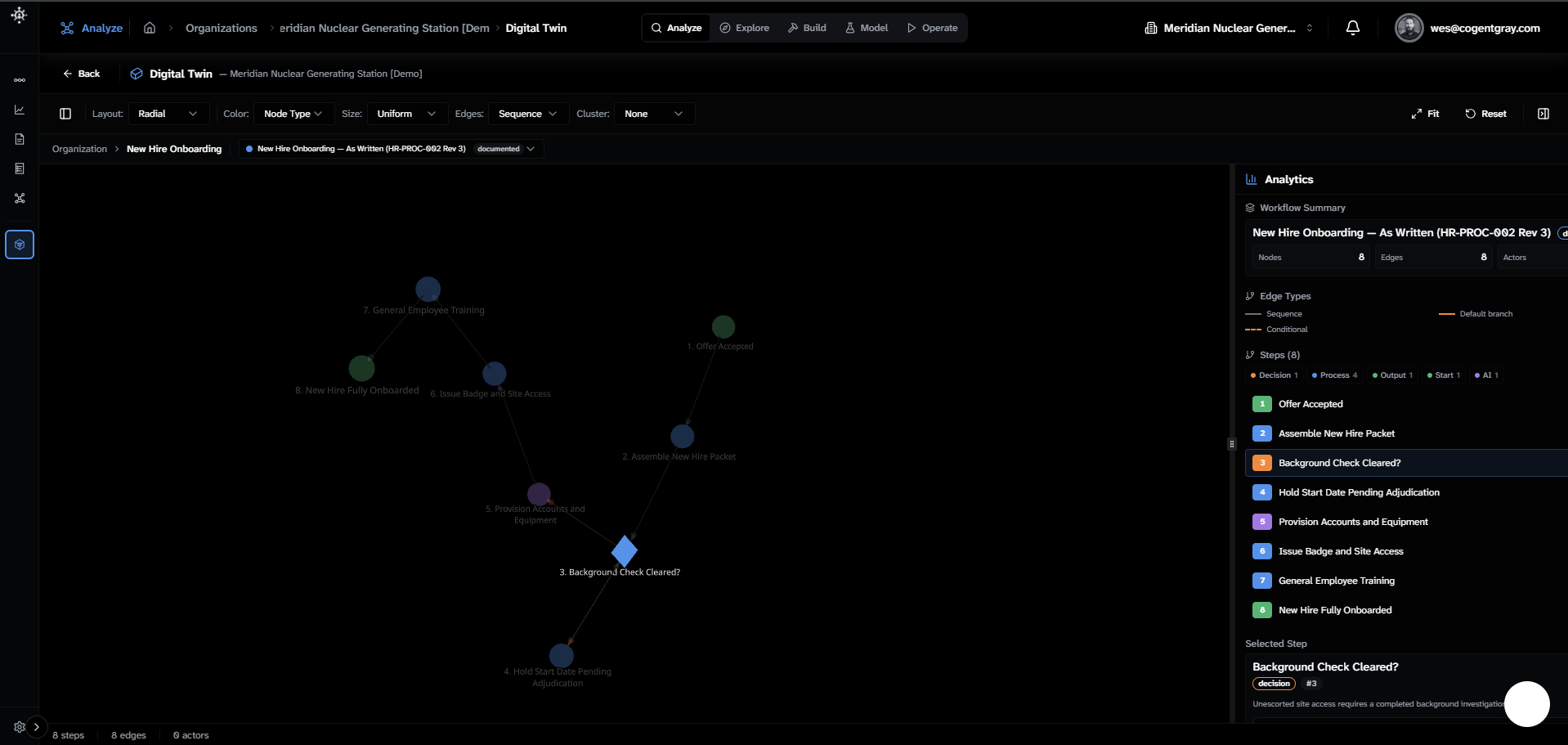
Analyze ingests what you already have: SOPs, policy manuals, system logs, screen recordings, whiteboard photographs, OpenAPI specs, and semi-structured interviews with the people who do the work.
Machine learning drafts the structure, then operators confirm or correct each step, so the map is validated by the humans it describes rather than inferred from logs alone. A workflow that takes a consulting team a quarter to document lands in about 3-5 business days at task level detail. Both the digital and the physical steps.
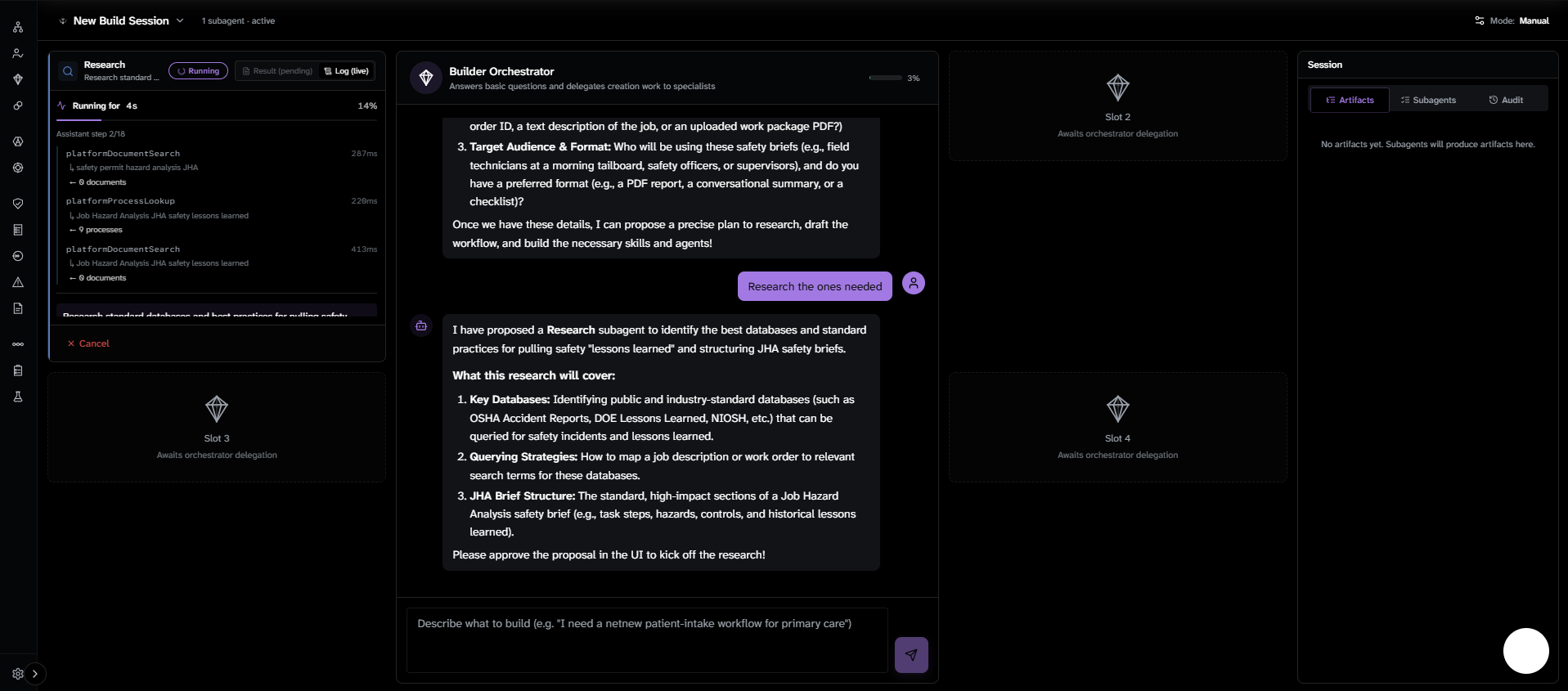
Build converts confirmed process steps into agentic automation, meaning software agents that carry out defined work and hand back to a person at each consequential junction. Role-based access governs who can view, decide, approve, and escalate. Every execution writes to a RAPIDE audit trail, a deterministic record of what the agent did and why, so a compliance officer can reconstruct any run months after the fact.
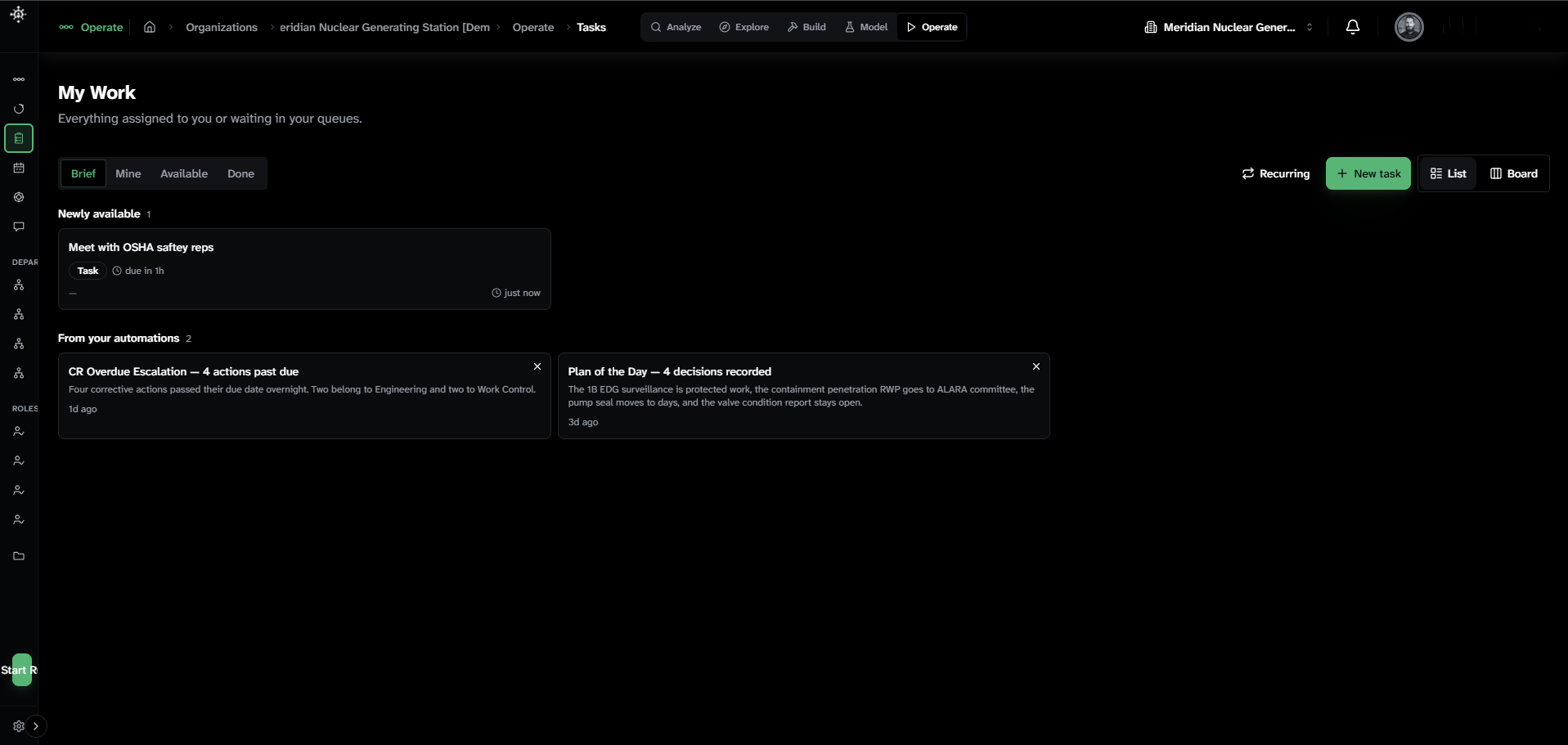
Operate runs the work in front of your team as a guided sequence, surfacing the right step, the right authority, and the right reference at the moment each is needed. Real-time instruments measure operator confidence, cognitive load, and authority alignment, so you can see where a process strains before it fails. Operate writes the knowledge generated during execution straight back into the map instead of letting it settle in somebody's inbox.
The Intelligence modules read from the same validated model, so nothing has to be rebuilt to start asking harder questions.

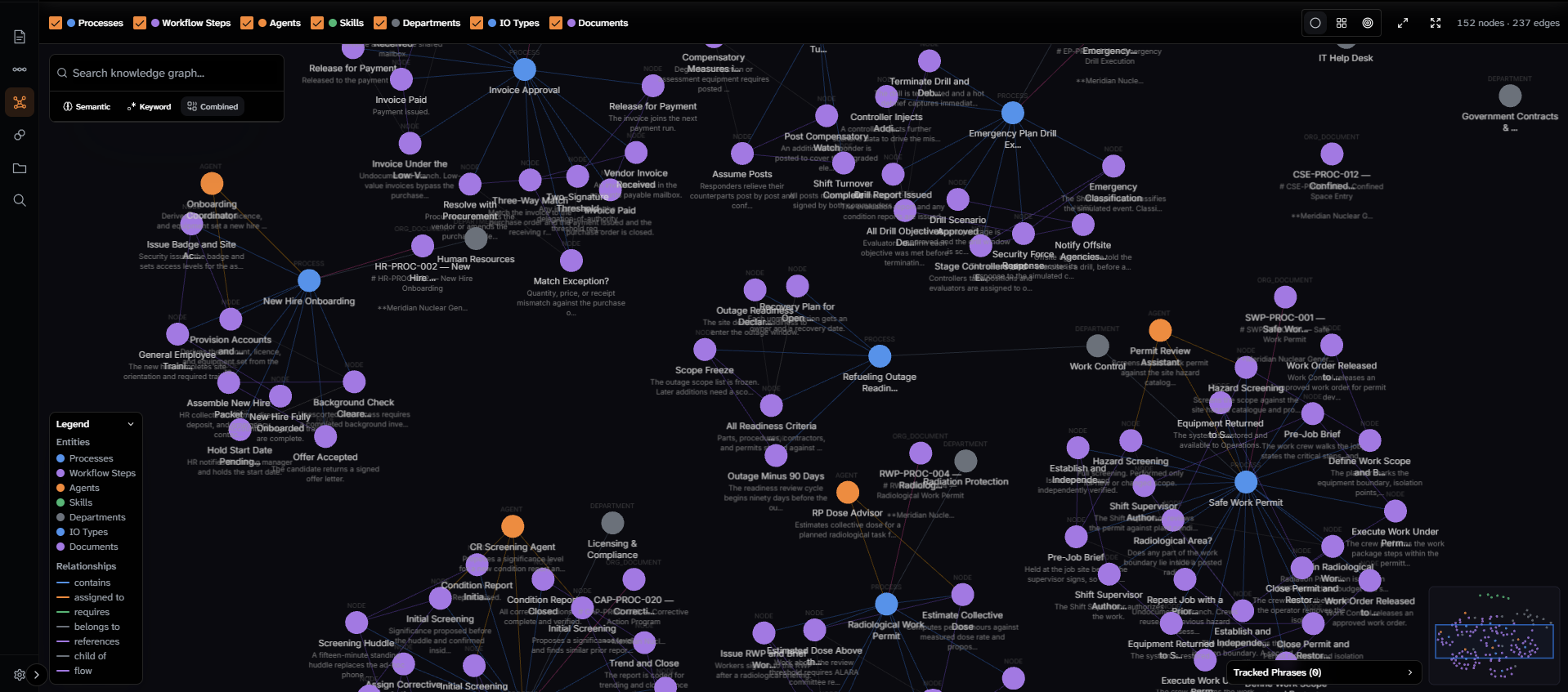
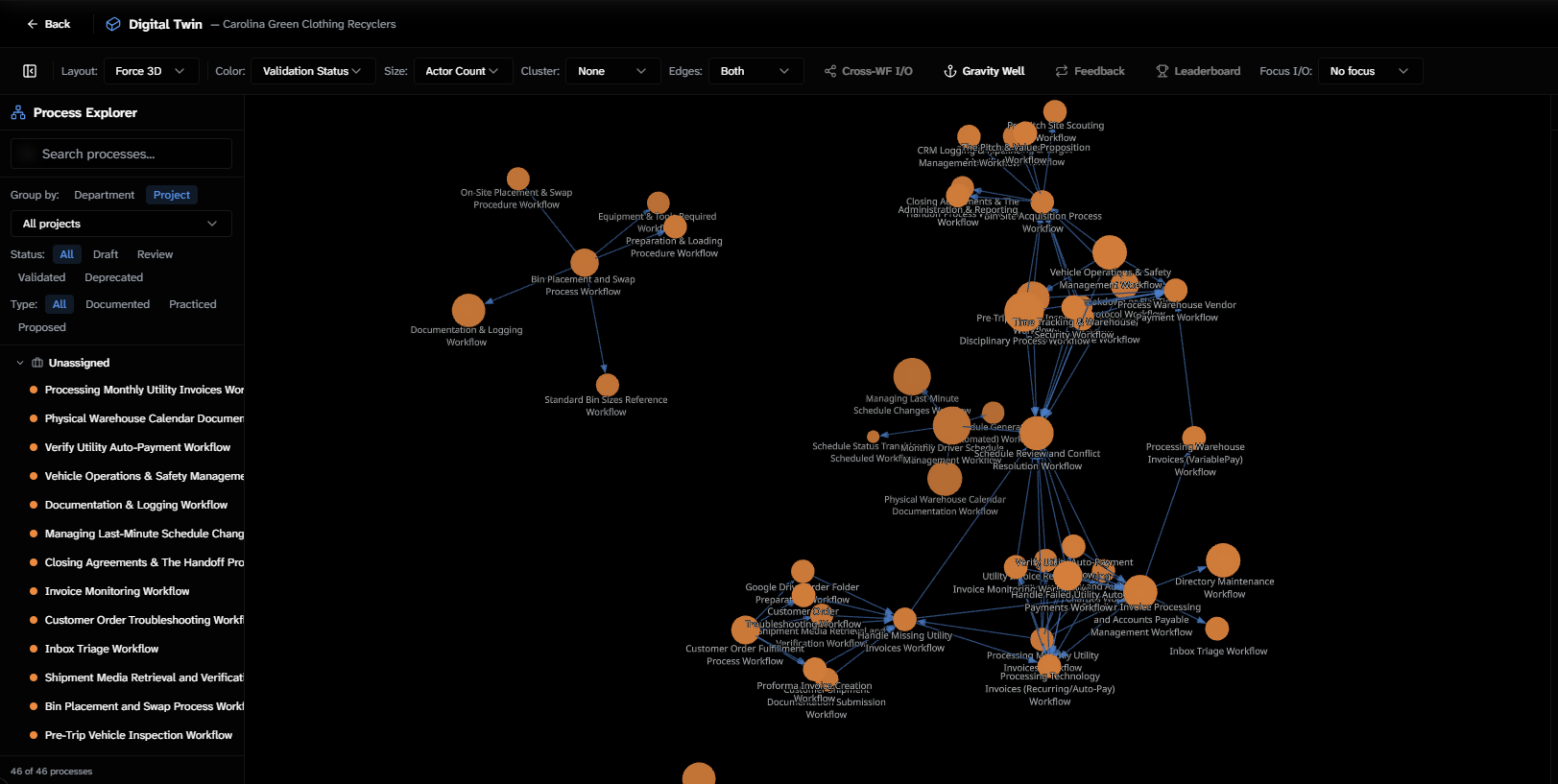
An organizational knowledge graph and documentation library, find meeting notes, documents, processes, inputs and outputs, all on one searchable knowledge graph.
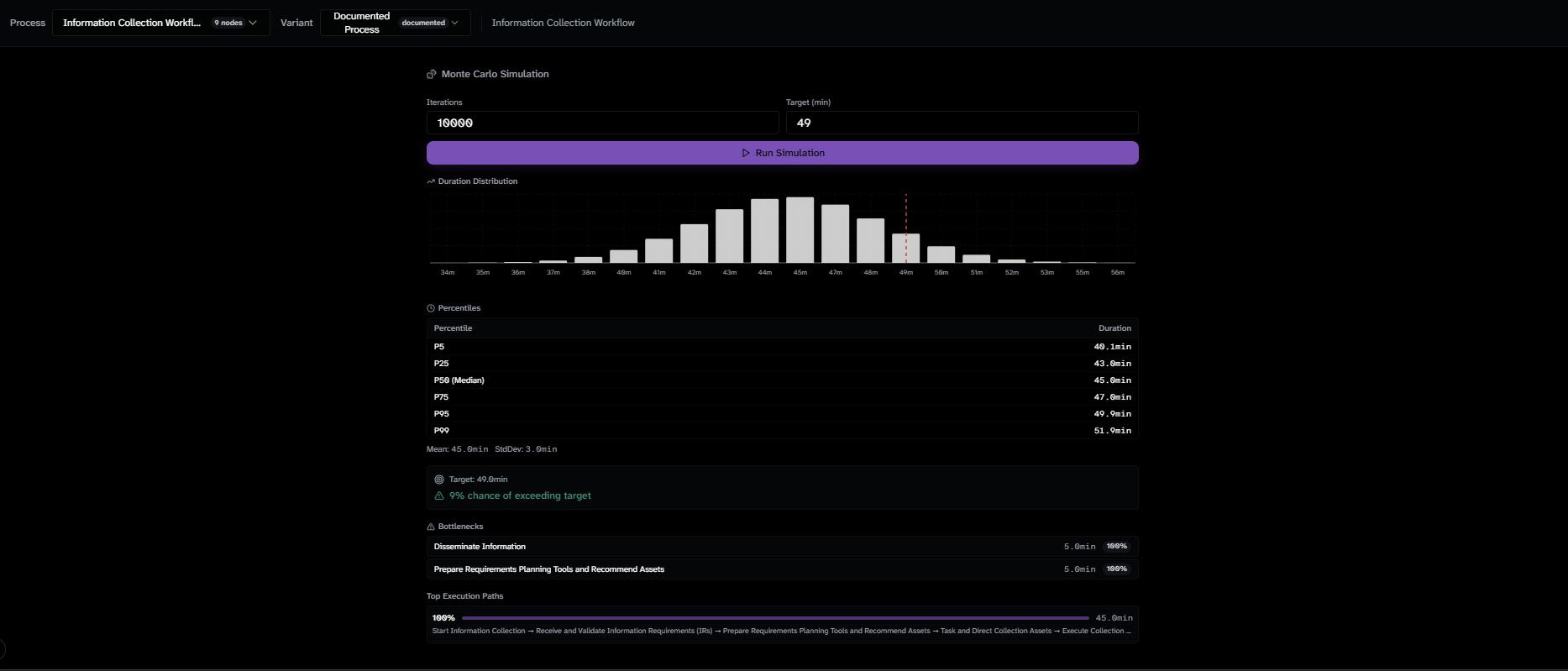
Monte Carlo simulation and agent-based modeling test a change against thousands of possible futures, running your people, processes, and systems together rather than in isolation.
Deterministic telemetry builds a directional graph of everything your AI agents do when run inside H-Synth. Enabling real-time monitoring and evaluation of agents and stoping policy violations in real time.
Screens are dense where density helps and quiet everywhere else.


Most assessments hand leadership a qualitative read: a rating, a heat map, a consultant's confidence. Metanoia quantifies. Monte Carlo simulation tests an intervention across thousands of simulated futures before anyone commits to it. Agent-based modeling runs your people, processes, and systems together under real conditions rather than one at a time on a whiteboard.
Value at Risk calculations price human error, compliance violation, and operational failure in the same currency your finance team already uses. The output is a statistically defensible risk posture, which in practice means a decision you can explain to a board, justify to an auditor, and revisit when conditions change.
The methods came out of defense and intelligence work, where a wrong estimate carried consequences that were not financial. They apply cleanly to a commercial operation, and they hold up under scrutiny.
We walk your environment and choose the smallest deployment that answers a question or solves a problem you actually have.
We configure modules against your systems, your output formats, and your access model. Your team keeps working in the tools they already know.
Operators confirm the captured process step by step. Nothing ships until the people who do the work recognize themselves in it.
Once the first map holds, further workflows, modules, and simulation layers come online at whatever pace your organization can absorb.
You arrived knowing something in the operation does not hold together, and that nothing you have tried has been able to show you why. Configured against your environment, H-Synth turns that suspicion into a model your leadership team and your operators both recognize, and Cartographer shows you the cultural ground any change has to cross.
The first conversation is a scoping session. We look at one workflow together, agree what a deployment would cover, and tell you plainly what it would produce.