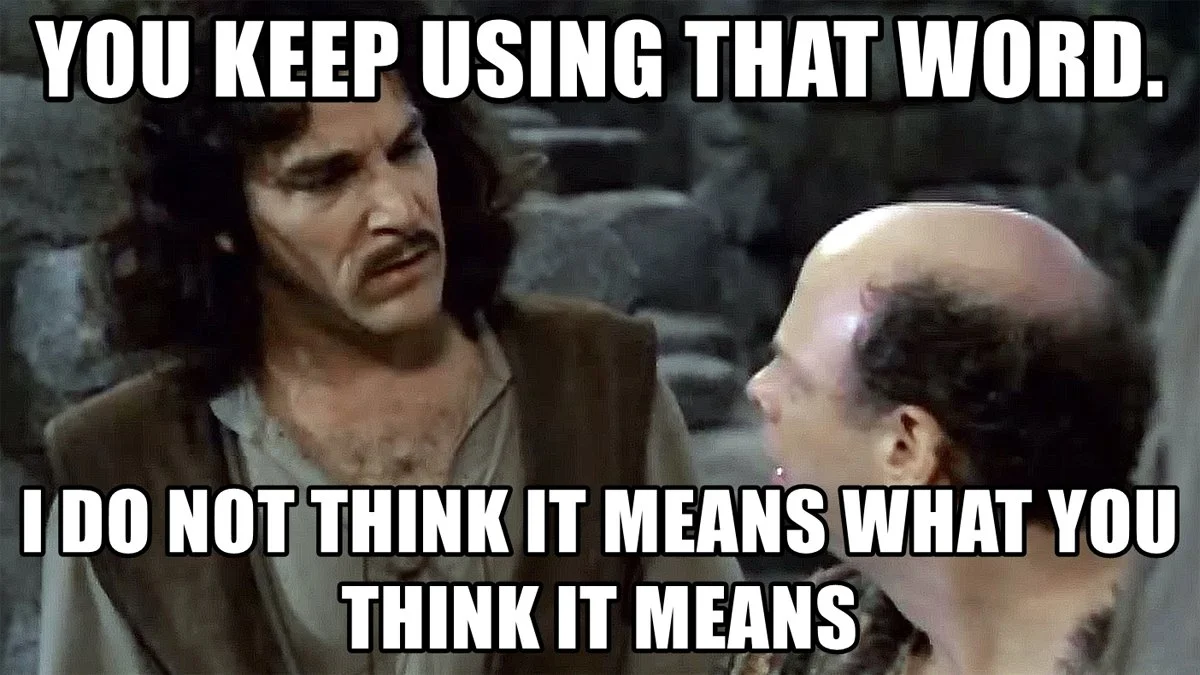
The word "set" has over 430 definitions in the Oxford English Dictionary. Four hundred and thirty.
Set a table. Set a bone. Set a trap. Set the sun. Set a record. Set in stone. Set apart. Set off. Set up.
Every single one requires different context to decode. English took four letters and stacked 430 meanings on top of them like a linguistic Jenga tower. And somehow we're surprised when communication with people or agentic systems break down.
The Abstraction Nobody Talks About
Language is an abstraction layer.
Not metaphorically. Literally. Every word is a pointer -- a reference that gestures at something in the real world without being the thing itself. The word "chair" is not a chair. The word "love" is not love. The word "set" is not... well, which of the 430 things do you mean?
We operate as if words have fixed meanings. They don't. They have clouds, constellations, and spectrums of meaning shaped by context, culture, history, and the specific neural wiring of the person hearing them. English is the lowest-context language from the lowest-context culture. It strips words from other languages, transliterates them, and imports the complexity without the centuries of cultural context that gave those words their depth.
We did it with shalom. We did it with karma. We did it with zeitgeist. Every time, the same pattern: borrow the word, lose the world that made the word necessary. American English assumes everything important is in the words themselves. It might be the closest, but it's still wrong.
Words as pointers
Every word you use is an abstraction. A pointer. A reference to something that exists in the real world -- or in someone else's head -- but the word itself is not THE thing.
Semiotics is the study of signs, symbols, representation, and meaning making. An entire field for studying problems like this. The signifier (the word) is not the signified (the thing). Your friend yells and the signifier points you out the window to the giant Yeti standing in your yard.
The deepest trick of language is that it pretends to be a window while also functioning as a distorting lens. Language promises a precise, clear picture of reality, when in fact, it completely shapes and warps how we perceive and conceptualize the world in our own minds.
The word "guilty" spoken by a jury foreman does more than report a fact; it creates one.
The Proof Is in the Cooking
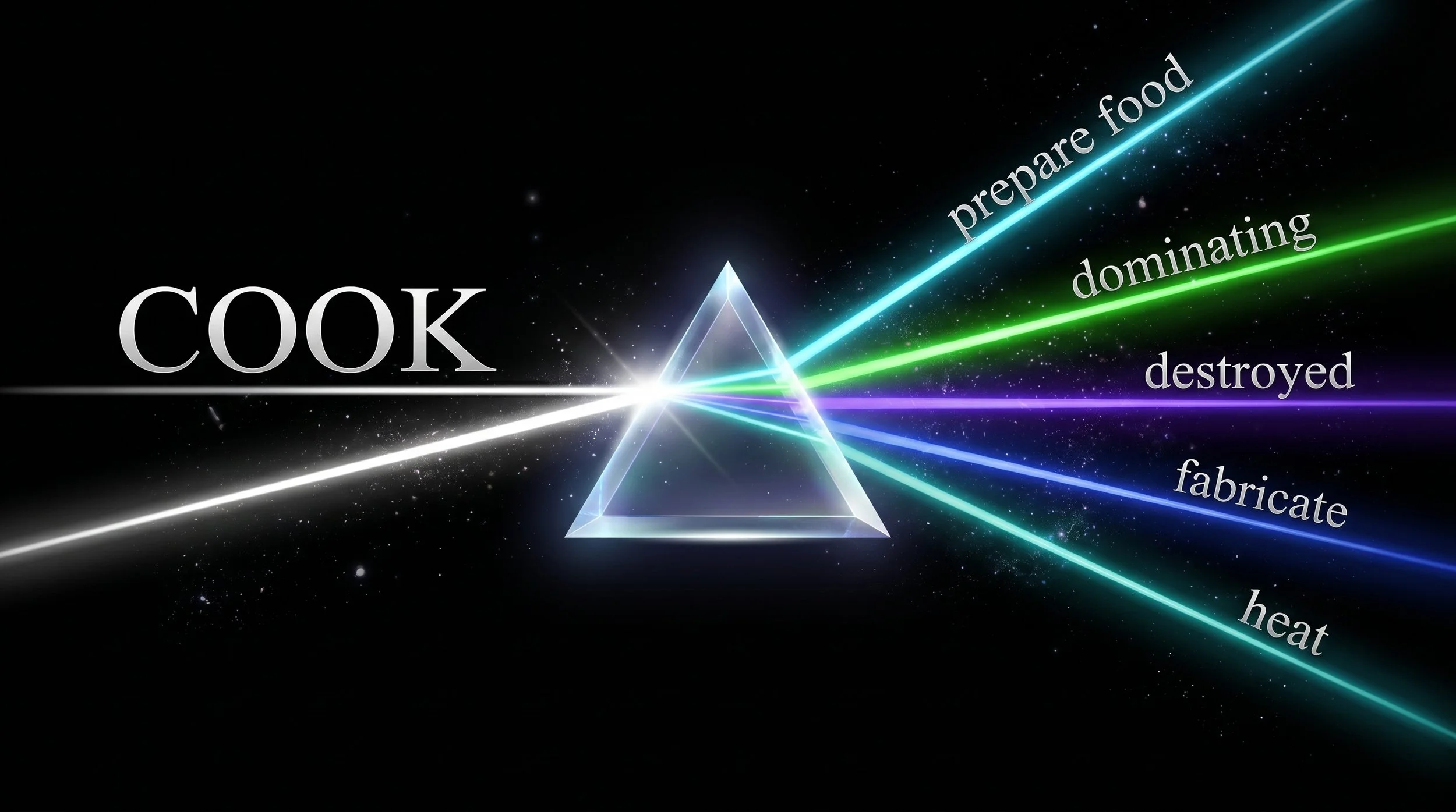
Want proof that context is everything? Watch someone say "let him cook" about a person dominating a debate. Now watch someone else say "he's cooked" about the same person losing the next one.
Elon Musk is gaming with his brother. He gets wrecked. "I'm cooked!" he yells.
Meanwhile, somewhere on X, a fan watches Elon dismantle a competitor's argument and posts: "Let him cook."
Same root word. Opposite meanings. Cooking means dominating, winning, being on fire. Cooked means toast, burnt, washed up, destroyed. It's only a tiny 4-letter word, but everything rides on context.
This isn't a quirk of slang. This is how all language works.
You're Lost? Turn Left at the Big Tree
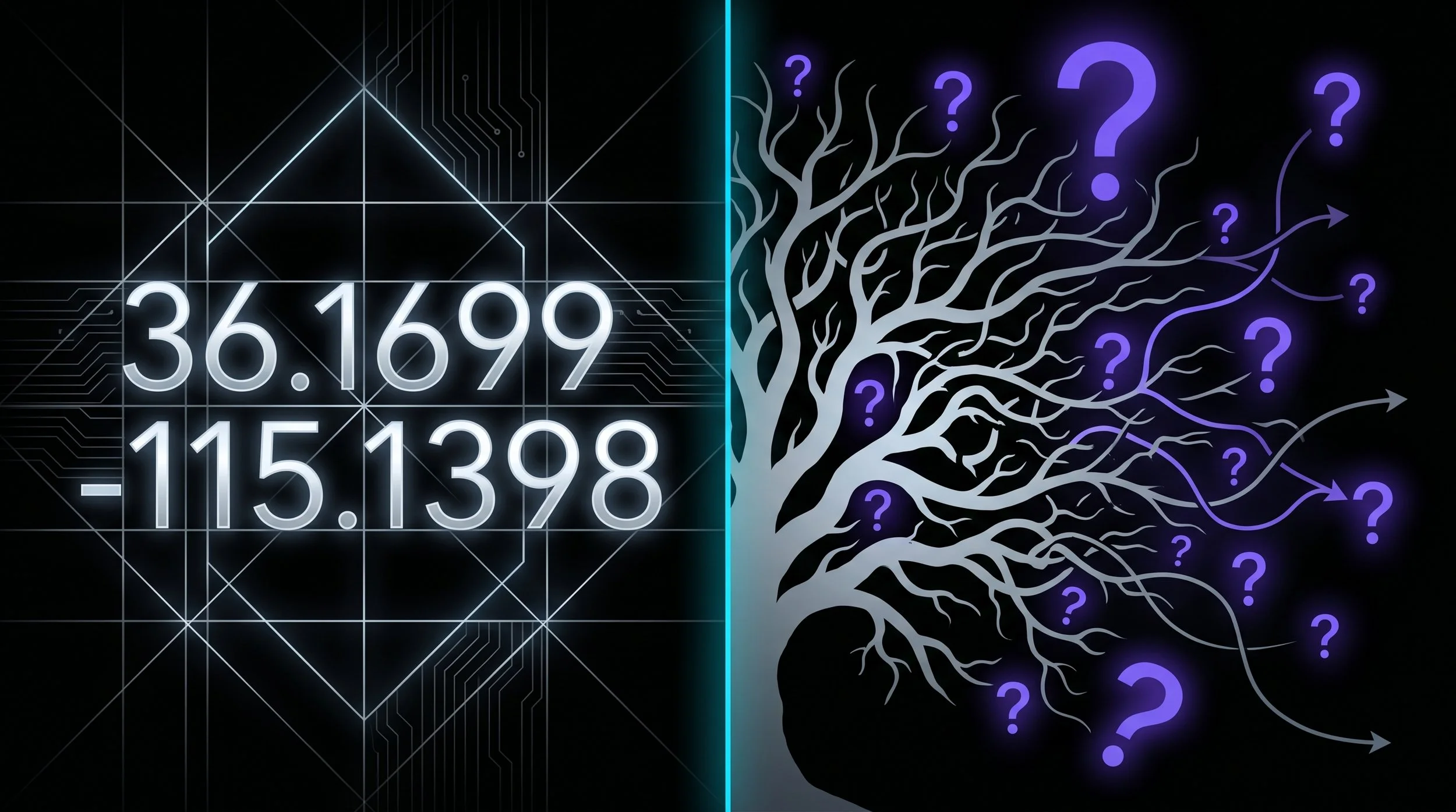
Consider GPS coordinates. 36.1699, -115.1398.
While it can be argued that mathematics itself is an abstraction, there is something distinct about coordinates. It is the most precise representation we can muster, it is measurable, and correlates to real distance and space.
Now consider: "Turn left at the big tree." Which tree? How big? Left from whose perspective? Every word in that sentence requires shared context to decode. And shared context is exactly what we have less of in an increasingly fragmented world.
Language is most often the tree directions, rarely the coordinates. Treating soft language as coordinates is a recipe for unintended consequences.
What This Means
The fix isn't better vocabulary. It's recognizing that every conversation is a translation exercise and then building for the delta between what you said and what they heard.
Every conversation, email, and strategy document is a collection of references that the reader decodes through their own situated understanding layer.
The fix isn't precision. You can't out-precision an abstraction layer. The fix is designing for the loss.
- Assume your words will be decoded differently than you intended.
- Build feedback loops.
- Create shared context before you need it. Treat every important communication as a rough draft that the other person will finish writing in their own head.
- Measuring and modifying a behavior within a given system is more important than the abstraction required to get there..
Precise GPS coordinates don't exist in language. The best you can do is give really good tree directions -- and then check that they found the right house.
Stay tuned for solutions to the abstraction problem in our next article on meaning making in human cognition.